

A few years back, making animated videos meant knowing timelines, keyframes, and onion skins. It was a world built for the animation elite. The ones who sketch storyboards for fun, dream in motion paths, and casually drop terms like bezier curves in conversation.
Then AI showed up with a plot twist. It didn’t just level the field, it blew the doors wide open. Now, all you need is an idea and a sentence. The tools take care of the rest.
Say hello to your new animation squad.
These are the free AI tools that changed how I create.
I’ve spent the last few weeks diving deep into these platforms. I tested everything from text-to-animation to avatar motion. Some tools felt clunky. Some felt like magic. And a few instantly earned a place in my creative workflow.
Here are the 10+ free AI animation tools that truly deliver. No art degree required. Just imagination and curiosity.
How I Chose and Ranked These AI Animation Tools
Before putting this list together, I didn’t just skim product pages or glance at feature lists. I actually used each of these AI animation tools myself. I created short videos, tested prompt accuracy, and pushed their limits to see how they perform in real-world use.
Here’s the exact set of criteria I used while testing and ranking them:
Truly Free Access
I focused only on tools that offer a genuinely free plan, not just limited-time trials. These tools let you create without needing to pay upfront or share credit card details.
Ease of Use
If a tool took longer than 15 minutes to figure out, it didn’t make the list. A good AI animation tool should be intuitive and easy to navigate, even if you’ve never used animation software before.
Output Quality
It’s not enough for a tool to be free and simple; the results need to be polished. I paid attention to how smooth, visually appealing, and customizable the final animations looked compared to similar tools.
AI Intelligence and Prompt Handling
Since most of these tools rely on text or voice inputs, I tested how accurately and creatively they translated those inputs into animation. I checked the accuracy of the text-to-animation process, scene consistency, and character responses.
Export and Sharing Options
I made sure that exporting your creation was hassle-free and that you could actually use the animation. The minimum requirement was MP4 or GIF export options with at least 720p resolution and no excessive branding.
Real-World Use Cases
I considered how each tool could be used for different projects like YouTube shorts or Instagram reels. Tools that felt flexible and adaptable for multiple content types scored higher, especially those optimized for social media.
The best free AI Animation tools at a glance
| Tool Name | Best For | Free Plan Availability | Main Strength |
| Genmo AI | Creative story snippets and cinematic scenes | Yes (credits, watermark) | Strong text-to-video motion accuracy |
| ToonCrafter | Cartoon-style animations from images or sketches | Yes | Smooth cartoon motion with style preservation |
| Adobe Express (Animate Characters) | Simple character animations using voice | Yes | Easy lip-sync animation for beginners |
| Pixverse AI | Short animated clips for social media | Yes | Realistic motion and trending effects |
| Pika AI | Fun, short AI-generated video clips | Yes | Fast text and image to video creation |
| Moonvalley AI | Professional cinematic motion videos | Limited access | Advanced motion and camera control |
| Domo AI | Social media animations and image motion | Yes (credits, watermark) | Multiple animation modes in one platform |
| Renderforest AI Animation Generator | Explainer videos and presentations | Yes (limited exports) | Large template and scene library |
| Invideo AI Animation Generator | Marketing and social media videos | Yes (watermark) | Built-in voiceovers and subtitles |
| Boba AI | Fast explainer and promo videos | Yes (branding limits) | Speed-focused text-to-video creation |
| Google Vids | Team videos and internal presentations | Workspace access | Seamless collaboration and AI guidance |
Top Free AI Animation Tools in 2026
Here’s a hands‑on look at the 10+ free AI animation tools I personally tested, ranked for quality, creativity, ease, and real‑world usefulness. I used each tool to generate animations, short videos, or dynamic scenes so I could share true experiences, not just copied blurbs.
1) Genmo AI
Website:https://www.genmo.ai/
Testing Score: 62/70
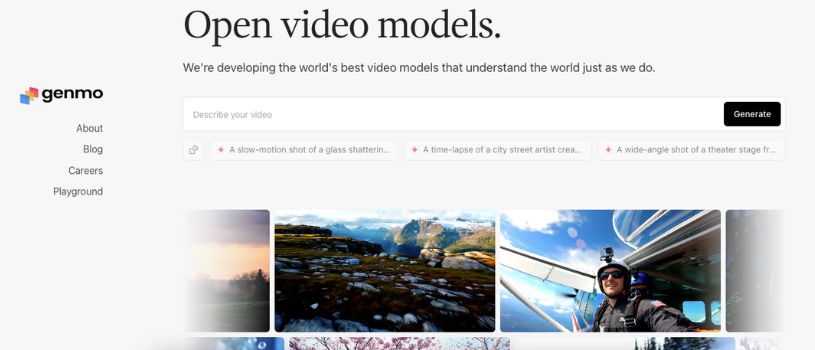
Genmo AI turned out to be one of my favorite tools for text‑to‑video generation. It uses the Mochi 1 model, which is open‑source and focused on smooth motion and prompt accuracy. I typed simple scene prompts and Genmo quickly generated short clips that felt cinematic and unique. The free plan gives monthly credits, but there’s a watermark unless you upgrade, so I balanced quality against cost.
I loved that it could turn a basic text idea into motion with minimal fuss, though I did notice that very long clips are limited in length and detail. It’s perfect for social posts, ideas, and story prototypes.
Key features:
- Creates videos from simple text prompts using advanced AI models
- Animates static images into short, expressive video clips
- Offers open-source video models like Mochi for advanced customization
- Includes an interactive playground to test prompts and preview results
Pros:
- High fidelity motion and prompt accuracy
- Open‑source model with customization potential
- Powerful for storytelling clips
Cons:
- Short video length limits full‑length projects
- Some tech complexity for beginners
Best For: Quick animated scenes and creative story snippets
Also Read:
Top Genmo Alternatives & Competitors
2) ToonCrafter
Website:Hosted through HuggingFace / experimental demos
Testing Score: 58/70
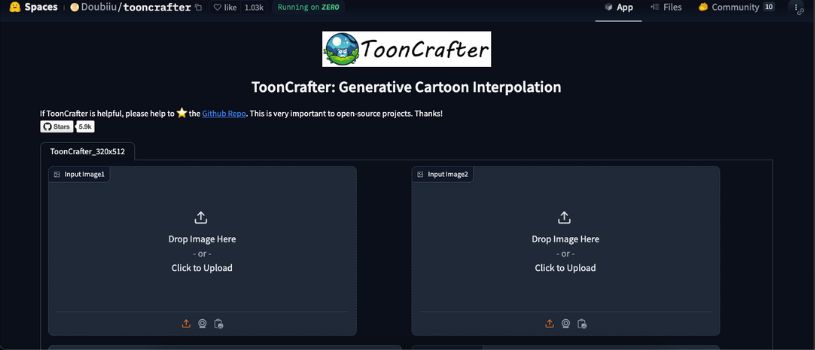
ToonCrafter caught my eye because it turns static images into short, animated clips by interpolating frames between art sequences. I tested a couple of cartoon sketches and the AI produced fluid transitions that felt like real motion rather than janky jump‑cuts. It’s great for character motion in cartoons and short looping animations.
The interface is simpler than traditional animation software, though it feels more like a creative lab than a polished production studio.
Key features:
- Turns sketches or images into smooth cartoon animations
- Uses AI interpolation to create natural motion between frames
- Preserves the original art style during animation
- Maintains fine visual detail for cleaner cartoon output
- Produces animations quickly with minimal setup
- Saves creation history for easy project management
Pros:
- Smooth transitions between cartoon keyframes
- Easy to animate still art
- Works with very little setup
Cons:
- Limited export formats and resolutions
- Not suitable for longer narrative animation
Best For: Cartoon animation and character motion
3) Adobe Express (Animate Characters)
Website:https://adobe.ly/3TnGHCv
Testing Score: 60/70
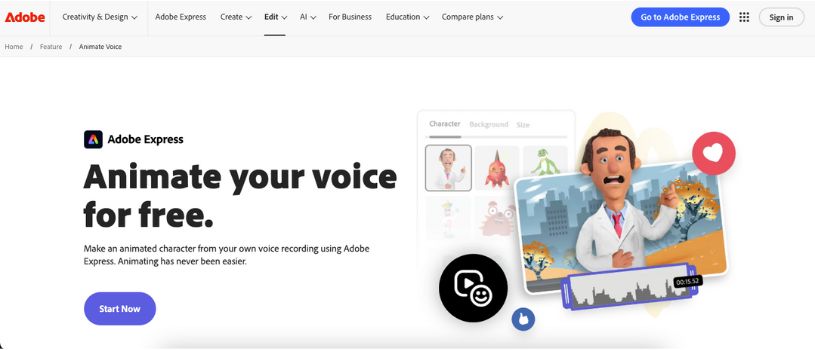
Adobe Express surprised me for a free animation tool. It lets you pick characters, upload audio or record your voice, and the AI automatically animates characters with lip sync. I made a short talking avatar clip and it felt fluid and expressive.
It doesn’t fully replace professional tools, but it works extremely well for social clips, YouTube intros, and presentation animations.
Key features:
- Animates characters using recorded voice or uploaded audio
- Automatically syncs lip movement and expressions with speech
- Provides a built-in library of characters and backgrounds
- Allows quick edits like trimming audio or switching scenes
- Works on both web and mobile without animation skills
Pros:
- Intuitive, drag‑and‑drop simplicity
- Lip sync with audio upload
- Great for character‑based animated content
Cons:
- Less control over advanced animation timing
- Some features locked behind Creative Cloud plans
Best For: Voice‑animated characters and social videos
4) Pixverse AI
Website:https://pixverse.ai/
Testing Score: 59/70
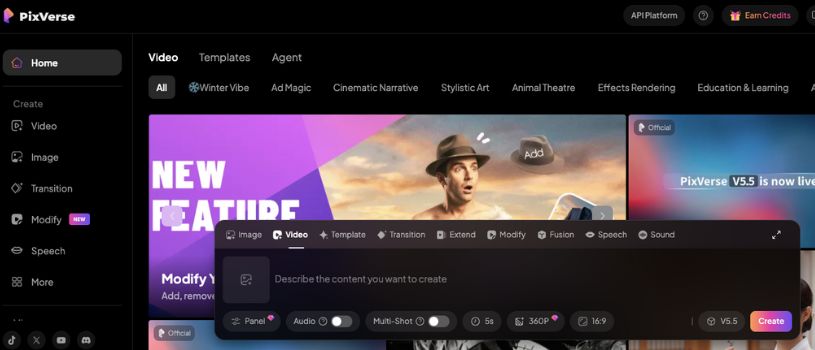
Pixverse excels at turning words or images into vivid animated videos. When I fed in photos and text prompts, it created dynamic clips with surprising realism and smooth motion transitions. The newer v4.5 model boosts animation quality across scenes.
It’s especially strong for image‑to‑video conversions and works well for TikTok or Instagram content where visuals need to pop quickly.
Key features:
- Generates animated videos from text prompts or images
- Delivers realistic motion with smooth physical movement
- Includes an AI prompt assistant for better results
- Offers trending effects designed for social media content
Pros:
- Polished effects and smooth motion
- Works from both text and image inputs
- Strong social media output quality
Cons:
- Free tier has generation limits
- Not as customizable as some other tools
Best For: Quick animated clips from photos or prompts
5) Pika AI
Website:https://pika.art/
Testing Score: 56/70
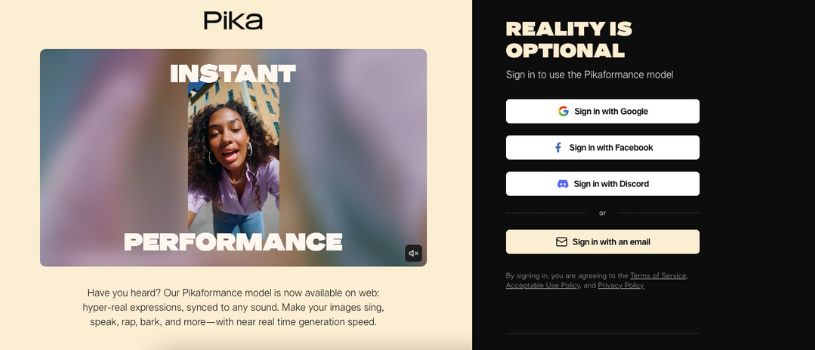
Pika AI’s strength comes from creative effects and fast turnaround. I tried its text‑to‑video and image‑to‑video modes and the results were impressive, especially with tools like Pikaffects that let you add surreal animations.
I liked experimenting with short cinematic clips and quirky transitions. The free tier works great for quick ideas, but longer or high‑res animations are behind subscription tiers.
Key features:
- Supports text-to-video and image-to-video generation
- Creates short animated clips ideal for quick storytelling
- Pikaframes improve motion flow between scenes
- PikaTwists add instant movement effects to videos
Pros:
- Creative effects like dynamic motion and transforms
- Works from text and images
- Easy to start with
Cons:
- Free plan limitations on length and quality
- Some advanced options require payment
Best For: Creative social content and fun videos
6) Moonvalley AI
Website:https://moonvalley.ai/
Testing Score: 54/70
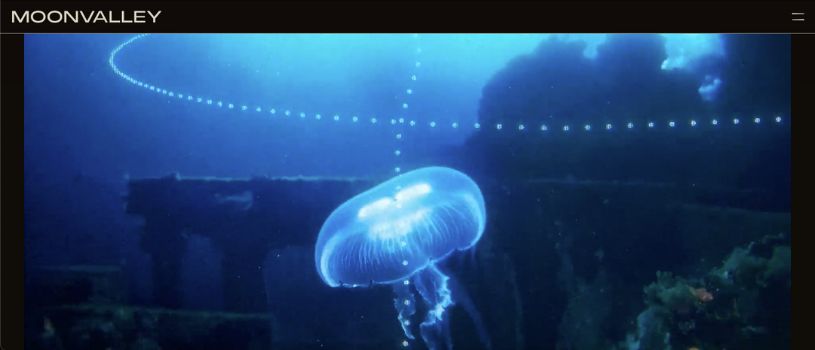
Moonvalley’s Marey model impressed me with cinematic style control and the ability to shape motion with trajectory inputs. I tested a short high‑HD animation and it felt more refined than most beginner tools.
It still feels like a tool in beta for creators who like to guide every frame, and the free access requires joining communities like Discord to get started.
Key features:
- Uses the Marey AI model for cinematic video quality
- Transfers motion and pose between video clips
- Provides control over camera movement and scene direction
- Produces realistic animation with high visual accuracy
- Trained on licensed data for safe commercial use
Pros:
- Strong cinematic quality and custom motion controls
- Works across animation styles
- Supports high‑definition output
Cons:
- Not as beginner‑friendly
- Free access is limited by beta/Discord method
Best For: Filmmakers and advanced content creators
7) Domo AI
Website:https://domoai.app/
Testing Score: 55/70
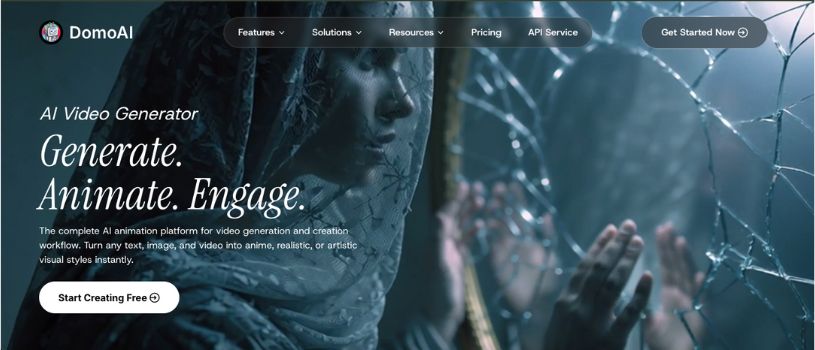
Domo AI was fun to use when I needed image‑to‑video and video‑to‑video transformations. I uploaded static images and even short clips, and the AI added motion, style effects, and smooth transitions.
It’s versatile for remixing videos, animating images, and even lip syncing content. The interface is clean and fast, perfect for creators who want results without deep learning curves.
Key features:
- Converts text, images, and videos into animations from one platform
- Supports character animation, lip sync, and talking avatars
- Includes creative templates and viral animation effects
- Offers tools like background removal and video upscaling
- Suitable for both beginners and advanced creators
Pros:
- Converts static art and footage into animated motion
- Easy to experiment with various visual styles
- Works for anime and other effects
Cons:
- Free plan has limited credits
- Some animation styles need tweaking
Best For: Remixing and reanimating existing media8) DomoAI
Website: https://www.domoai.app/
Testing Score: 64/70
DomoAI surprised me with how much it packs into one platform. It’s not just a text-to-video tool—it also handles image animation, video-to-animation, and even talking avatars. I tested it by uploading a static image and a short text prompt, and within minutes, it generated a lively animated clip that felt perfect for social media.
What stood out was how beginner-friendly it felt. I didn’t need to tweak complex settings to get usable results. The free plan comes with credits, which makes it easy to experiment, though exports include a watermark unless you upgrade. Still, for testing ideas and creating quick visuals, it delivers solid value.
DomoAI works best for short, engaging content rather than long cinematic projects. If your goal is fast creation and visual impact, it fits nicely into a creator’s workflow.
Key features:
- Converts text, images, and videos into animated content from one platform
- Animates static images with natural motion and effects
- Supports character animation, lip sync, and talking avatars
- Includes creative templates and viral animation styles
- Offers quick tools like background removal and video upscaling
Pros:
- Easy to use, even for beginners
- Multiple animation modes in one dashboard
- Free credits available for testing
Cons:
- Watermark on free exports
- Limited control for advanced cinematic scenes
Best For: Social media animations, quick visual ideas, and short AI-generated clips
8) Renderforest AI Animation Generator

Website:https://www.renderforest.com/ai-animation-generator
Testing Score: 60/70
Renderforest AI Animation Generator feels like a comfort tool. It is simple, familiar, and easy to trust. I tested it by entering a short idea instead of a full script, and it automatically built an animated sequence using ready-made scenes, characters, and transitions. The whole process felt guided, which helps when you do not want to start from a blank canvas.
What I liked most is how little effort it takes to get something usable. You type your idea, pick a style, and Renderforest handles the rest. The free plan is enough to test animations and understand the workflow, though exports come with limitations unless you upgrade. It is clearly designed for speed and clarity rather than deep creative control.
Renderforest works best when you need explainer-style animations or clean visuals for business, education, or presentations. It may not be the most flexible tool, but it remains reliable and beginner-friendly.
Key features:
- Turns text or ideas into animated scenes automatically
- Includes a large library of characters, scenes, and templates
- Allows basic customization of colors, music, and voiceovers
- Provides instant previews before exporting
- Supports easy sharing and downloads for multiple platforms
- Offers free access with optional paid upgrades
Pros:
- Very easy to use with no learning curve
- Large template library saves time
- Good for business and explainer videos
- Stable and consistent animation quality
Cons:
- Limited creative control compared to advanced tools
- Free version includes export restrictions
- Animations can feel templated if overused
Best For: Explainer videos, presentations, and simple animated content for businesses or educators
9) Invideo AI Animation Generator

Website: https://www.invideo.io/
Testing Score: 61/70
Invideo AI Animation Generator feels more like a complete video assistant than just an animation tool. I tested it by typing a short prompt, and it instantly generated a video with animated scenes, stock visuals, subtitles, and even a voiceover. The experience felt fast and practical, especially for content meant for social platforms.
What stood out to me was how well it handles text-based storytelling. You do not just get animations. You get a ready-to-publish video with pacing, captions, and background music already in place. The free plan lets you explore most features, but exported videos include a watermark unless you move to a paid plan.
Invideo works best when speed matters more than deep creative control. It is not built for custom character animation, but it shines when you want polished videos without manual editing.
Key features:
- Converts text prompts into animated videos automatically
- Adds AI voiceovers with multiple accent and tone options
- Generates subtitles and captions without manual effort
- Includes a large stock library for visuals and background music
- Supports vertical, square, and horizontal video formats
Pros:
- Very fast video creation from text
- Built-in voiceovers and subtitles save time
- Strong focus on social media-ready content
- Multiple export formats for different platforms
- Beginner-friendly interface
Cons:
- Watermark on free exports
- Limited character-level animation control
- Stock-heavy visuals can feel repetitive
- Less flexibility for cinematic storytelling
Best For: Social media videos, marketing clips, and quick animated content with voiceovers
10) Boba AI
Website: https://www.boba.video/
Testing Score: 58/70
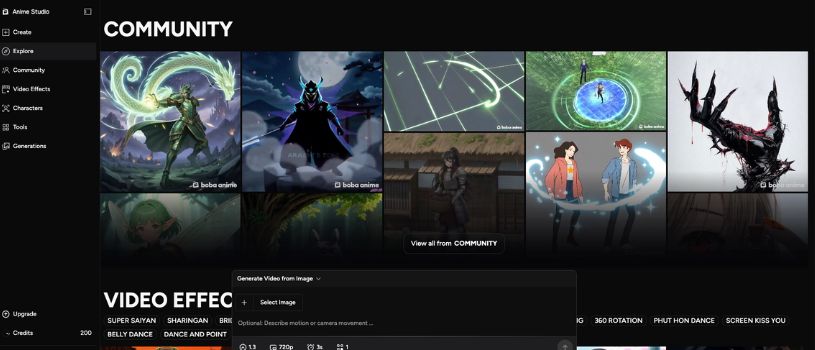
Boba AI focuses heavily on speed and simplicity. I tested it by pasting a short script, and it quickly turned the text into an animated-style video using stock visuals, captions, and background music. The process felt lightweight and fast, which makes it useful when you want content out quickly without worrying about editing timelines.
What makes Boba AI interesting is how direct it feels. There are fewer creative choices compared to advanced tools, but that also means fewer decisions to slow you down. The free version lets you try the workflow, though branding and export limits push you toward a paid plan if you want cleaner output.
Boba AI works best for quick marketing videos and short explainers. It is not built for deep animation control, but it does a decent job when speed matters more than customization.
Key features:
- Converts text scripts into short animated-style videos
- Automatically adds captions and background music
- Uses stock visuals matched to the script context
- Simple editor for quick text and scene adjustments
Pros:
- Extremely fast video generation
- Simple interface with minimal learning curve
- Useful for quick content drafts
Cons:
- Limited animation and motion control
- Heavy reliance on stock footage
- Free exports include branding
- Not ideal for character-based animation
- Fewer customization options compared to competitors
Best For: Fast explainer videos, marketing drafts, and short promotional content
11) Google Vids
Website:https://workspace.google.com/products/vids/
Testing Score: 59/70
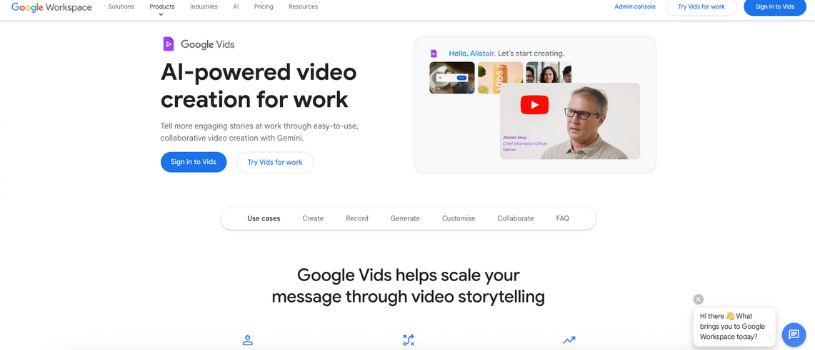
Google Vids feels like Google’s answer to quick, collaborative video creation. I tested it inside a Google Workspace environment, and the experience felt familiar right away. You start with a prompt or outline, and Google Vids helps turn that into a structured video using AI-generated scenes, visuals, and suggested layouts.
What I liked most is how well it fits into existing workflows. If you already use Google Docs, Slides, or Drive, Google Vids feels natural. It is not trying to be a cinematic animation tool. Instead, it focuses on clarity, structure, and teamwork. The AI helps with visuals and pacing, but you still guide the story.
Google Vids works best for internal videos, presentations, training content, and simple explainers. It is not designed for flashy animations, but it does a solid job for professional and educational use.
Key features:
- Creates videos from prompts, outlines, or existing documents
- Uses AI to suggest scenes, visuals, and structure
- Integrates smoothly with Google Workspace tools
- Supports real-time collaboration with team members
- Simple timeline editing for quick adjustments
Pros:
- Easy to use for anyone familiar with Google tools
- Strong collaboration features for teams
- AI guidance helps structure videos quickly
- Good for professional and educational content
Cons:
- Limited animation and visual effects
- Not suitable for creative or cinematic projects
- Requires Google Workspace access
- Fewer export and styling options compared to creator-focused tools
Best For: Team presentations, training videos, internal explainers, and business-focused content
How to Choose the Best AI Animation Tool For Yourself?
Choosing the right AI animation tool comes down to your goals, not just features. The best tool is the one that fits your workflow and helps you create faster without frustration.
- Decide what type of content you want to create, such as social media clips, explainer videos, or presentations
- Choose a tool that matches your skill level, especially if you prefer simplicity over advanced controls
- Check free plan limits like watermarks, video length, and monthly credits before committing
- Make sure the tool supports the video formats you need, such as vertical, square, or horizontal
- Consider how well the tool fits into your existing workflow and tools you already use
Conclusion
AI animation tools in 2026 are breaking creative barriers, and the best part is—they’re free to try. Whether you’re a beginner, a content creator, or just curious about animation, there’s a tool on this list that can bring your ideas to life. I’ve tested each one personally, and now it’s your turn to explore, create, and animate without limits.
Frequently Asked Questions (FAQs) About Free AI Animation Tools
1. Are these AI animation tools really free to use?
Yes, all the tools listed here offer free versions. However, most free plans come with a few limitations.
You might get watermarked exports, shorter video lengths, limited credits each month, and videos in lower resolution (usually 720p). Despite these limits, you can still create solid animations for free. But for advanced features or higher quality, you’ll likely need to upgrade.
2. What kind of animations can I make with these tools?
It really depends on which tool you’re using, but you can create a wide range of animations. For example, you can make text-to-video animations with tools like Genmo, Pika, or Pixverse. If you want to create talking characters, Adobe Express has got you covered.
If you’ve got some artwork you want to bring to life, ToonCrafter can turn it into cartoon motion. For remixed videos, Domo AI is a great choice, and if you’re looking for cinematic scenes, check out Moonvalley AI. Some tools focus on realism, while others offer a more stylized, creative approach.
3. Do I need animation or design skills to use them?
Not at all! These tools are made for people who don’t have a background in animation or design. All you have to do is type a prompt, upload an image, record your voice, or drag and drop assets. The AI takes care of the animation part for you.
If you can describe what you want, the tool will bring your ideas to life with no hassle.
4. Can I use the animations for YouTube, Instagram, or TikTok?
Yes, you can absolutely use these animations on social media platforms like YouTube, Instagram, or TikTok.
5. Are these tools good enough for professional projects?
For quick content like short videos, promos, and social media posts, these tools work great! They’re fast and affordable, making them perfect for those types of projects. If you’re working on something bigger, you can always upgrade to a paid plan for more features.
You could also use the AI-generated animations as a first draft and then polish them up with professional editing tools to make them more polished.
6. Can I combine multiple tools for better results?
Yes! Combining tools can help you get even better results. For example, you could create a talking avatar with Adobe Express, then add cinematic transitions using Pixverse or Pika. To finish, use Domo AI for motion overlays. It’s all about combining the right features from each tool to get the best outcome for your project.
7. Do these tools store my content or data?
Most of these tools will store your projects temporarily or in the cloud. If you’re concerned about privacy, it’s a good idea to check the privacy policies before uploading anything sensitive.
8. What’s the easiest AI animation tool to start with?
Based on testing, here’s what we recommend: Adobe Express is a fantastic choice for beginners. If you enjoy writing prompts, Genmo AI is a good fit.
For those who already have artwork and want to animate it, ToonCrafter is a great tool. Ultimately, choose the one that feels the most natural for your style and workflow.