
The rise of AI motion design tools like Jitter has changed how creators bring ideas to life. Instead of wrestling with complex software or timelines, designers can now animate UI elements, text, and illustrations right in the browser, no downloads required.
But Jitter isn’t the only option on the table. Whether you’re a UI/UX designer, content creator, or startup looking for more advanced controls, better export formats, or creative flexibility, there are powerful alternatives worth exploring.
Here are five of the best Jitter alternatives to try in 2026.
Top Jitter Alternatives in 2026
1. Adobe After Effects
Adobe After Effects is a professional-grade motion graphics and visual effects software trusted by designers, animators, and filmmakers worldwide. With powerful tools for keyframe animation, compositing, and 3D motion, it gives you complete control over every frame. While it’s not browser-based, it remains the go-to solution for high-end motion design work.
Highlights:
-
- Precision keyframe animation and advanced motion controls
-
- Seamless integration with Adobe Creative Cloud apps
-
- 3D camera tracking and visual effects
-
- Rich plugin ecosystem for extended functionality
-
- Exports in high-quality formats for broadcast, web, or app
Best for: Designers and studios creating professional-grade animations, VFX, or UI transitions with full creative control.
Why it’s a great Jitter alternative: Adobe After Effects offers unmatched depth for motion design. It’s ideal for users who need advanced animation tools beyond browser-based limits. While it comes with a steeper learning curve, the customization and creative freedom are worth it.
2. LottieFiles
LottieFiles simplifies the process of creating and using lightweight animations across web and mobile platforms. It works with JSON-based animations powered by the Lottie framework, allowing designers to create motion that’s both scalable and fast-loading. With tools for editing, previewing, and collaborating, LottieFiles fits right into modern UI workflows.
Highlights:
-
- Supports bodymovin and JSON-based Lottie animations
-
- Live previews across devices and platforms
-
- Easy integration with Figma, After Effects, and code
-
- Collaboration features for teams
-
- Export-ready for iOS, Android, and web
Best for: UI/UX designers and developers who need high-performance, scalable animations for apps or responsive websites.
Why it’s a great Jitter alternative: LottieFiles focuses on performance and cross-platform delivery. It’s perfect for teams that prioritize speed, responsiveness, and integration with design and dev tools. You get more control over lightweight animation delivery without sacrificing design quality.
3. Animaker
Animaker is a beginner-friendly animation platform designed for quick video creation. It offers a drag-and-drop interface with pre-built templates, characters, and motion presets. Whether you’re creating explainer videos, product demos, or animated content for social media, Animaker helps you do it fast without needing professional animation skills.
Highlights:
-
- Large library of templates, characters, and scenes
-
- Easy drag-and-drop animation controls
-
- Supports voiceovers, subtitles, and background music
-
- Direct export to YouTube and social platforms
-
- Team collaboration and brand kits
Best for: Marketers, content creators, and beginners who need to produce animated videos quickly with minimal learning curve.
Why it’s a great Jitter alternative: Animaker is ideal for users focused on storytelling and video content over UI animation. If you’re looking for simplicity, speed, and ready-made assets, it’s a strong pick—especially for teams without motion design experience.
4. Vyond
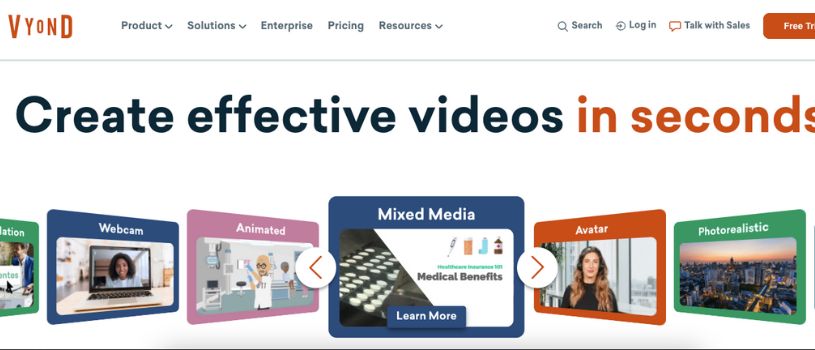
Vyond is built for creating professional animated videos that communicate ideas clearly. With a focus on business storytelling, it offers customizable characters, scenes, and transitions tailored for training, marketing, and internal communications. Its intuitive interface makes it accessible even for non-designers.
Highlights:
-
- Pre-built templates for business use cases
-
- Customizable characters and lip-sync features
-
- Timeline editor with drag-and-drop controls
-
- Library of props, music, and sound effects
-
- Collaboration tools for team workflows
Best for: Businesses creating training videos, explainers, or presentations that need animation without a complex setup.
Why it’s a great Jitter alternative: Vyond shines when storytelling and communication are the priorities. It’s a great pick for teams that value speed, clarity, and branded content creation over frame-by-frame motion control.
5. Renderforest
Renderforest is an all-in-one platform for creating animations, videos, logos, and mockups in the cloud. With a wide range of templates and visual assets, it’s built for users who want polished results without spending hours designing from scratch. Everything runs in the browser, with no software installation needed.
Highlights:
-
- Template-based animation creation for intros, explainers, and promos
-
- Built-in branding tools for logos and color schemes
-
- Cloud rendering with high-quality export options
-
- Supports video, mockup, and website creation
-
- Beginner-friendly interface with guided workflows
Best for: Creators, small businesses, and marketers who want fast, high-quality animated content for branding or promotion.
Why it’s a great Jitter alternative: Renderforest is perfect for users who value convenience and visual polish. It’s less focused on UI animation, but a strong choice if your priority is speed, brand consistency, and ready-to-use designs.
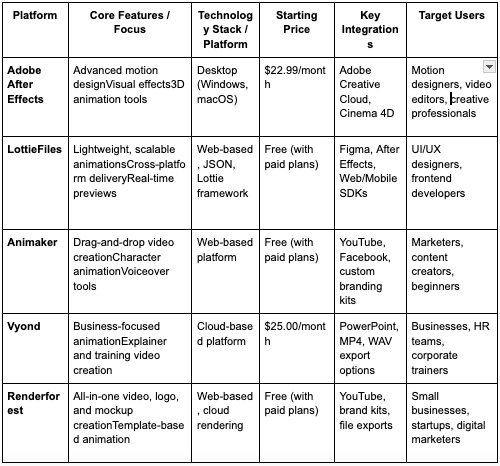
Comparison Table
Here is a short and smart comparison table for you to get a good glimpse about all these tools:
So which one should you use?
The right Jitter alternative depends on what you’re creating, how much control you need, and your experience level.
If you’re a professional motion designer or studio working on detailed animations, Adobe After Effects gives you full creative freedom and precision. It’s powerful, flexible, and built for complex motion work.
Need lightweight, developer-friendly animations for apps or websites? Go with LottieFiles. It’s built for performance and plays well with design tools like Figma and After Effects.
If you’re looking for speed and simplicity, Animaker and Renderforest are excellent for social videos, promos, and explainers. Both offer templates and drag-and-drop tools that make animation fast and approachable—even if you’ve never designed before.
For business-focused content like internal training or product walkthroughs, Vyond is the most efficient. It’s ideal for non-designers who need clean, professional-looking videos without a learning curve.